


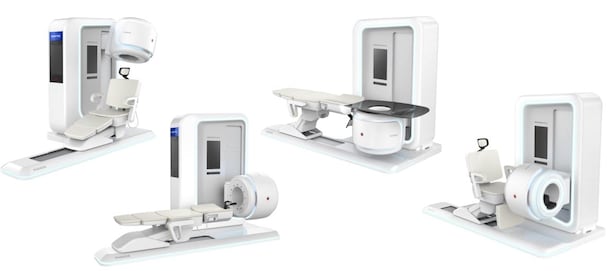
As a strength compared with global competitors, the company cited its experience developing hardware and software together.
Lee said, "There are leading corporations in the global market with long-standing experience and technological prowess," adding, "Rather than competing at the same scale as these players, Brightonix Imaging intends to leverage the strengths of a research and development-centered company that can respond more quickly to new technologies and clinical needs."
He added, "Based on our experience developing both hardware and software, we expect to provide solutions that reflect the real needs of the medical field."
AI is also a core pillar of this development. The company has already developed BTX Brain, PET imaging quantitative analysis software, and supplies it to domestic medical institutions.
Lee said, "In next-generation PET, AI is not an optional technology but a key element for improving image quality, advancing quantitative analysis and enhancing data processing and analysis workflows," adding, "We plan to design and develop AI not as a simple add-on, but so it can be safely integrated across the entire medical device system."
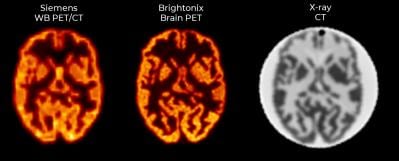
He predicted that once next-generation digital PET is commercialized, changes will appear for patients and in the medical field.
Lee said, "The foundation to evaluate diseases earlier and more accurately will be strengthened," adding, "If improvements in digital PET performance are accompanied by better exam efficiency and expense structures, access to high-performance PET exams will expand, allowing patients to have more opportunities for testing and to reduce their burdens."
Seoul National University Hospital, Sogang University and KAIST will participate in this research and development as joint research institutions. Seoul National University Hospital will contribute to deriving clinical requirements, verifying system performance and developing AI technology, while Sogang University and KAIST will be responsible for detector and signal processing technology development.
Lee explained, "A PET system is a complex medical device that must combine detectors, electronic circuits, software and clinical validation," adding, "Rather than having a specific institution take sole charge of individual technologies, we plan to build an organic cooperative structure in which industry, academia and hospitals think through and solve the complex technical challenges that arise during development together."
The company is also fleshing out its commercialization and global expansion strategy.
Lee said, "Because we gained experience with U.S. FDA approval during the PHAROS development process, we plan to pursue this project by considering quality control and global regulatory requirements from the research and development stage," adding, "We will first prove the product's value in the domestic market, then proceed step by step into major markets such as the United States and Europe." He added, "We are also actively seeking opportunities to collaborate with overseas corporations and medical institutions."
Using this project as a springboard, Brightonix Imaging also laid out a blueprint to leap from a PET equipment company to a molecular imaging platform company.
Lee said, "We aim to grow into a company that makes a practical contribution to patient diagnosis and treatment through molecular imaging technology," adding, "We plan to strengthen our research and development capabilities not only in whole-body digital PET, but also in AI-based image analysis, quantitative imaging and theranostics." He emphasized, "We will continue to take on challenges so that technology developed domestically can be used in the global medical field."
source: Brightonix Imaging advances Korea’s AI-driven digital PET for global rollout - CHOSUNBIZ